
Time Inflation
Travis Turner, a national expert on inflation, discovered a novel economic principle called “Time Inflation” and it starts occurring after decades of price inflation—companies start cutting customer service levels and this saves the company costs while costing their consumers more time to use their products and services.
Consumers value their time and money differently. Affluent consumers value their time higher while poorer consumers value their money higher. In economics terms, consumers have different price elasticity sensitivities and different time elasticity sensitivities.
Companies use their knowledge, offering early check-in or other services to help affluent consumers avoid waiting in line. (None of this is new, keep scrolling for time inflation comments).
Companies Start With Product Size and Product Quality Reductions
As inflation continues, companies keep raising their prices but over time, the market becomes increasingly sensitive to and turned off by higher prices. Consumers refuse to pay higher prices, and shift to cheaper goods then substitute goods. Instead of a $60 steak diner, they move to the lower price chain at $30. But then over time, they shift away from the $30 cheaper steak to the $15 combo meal, and then last, to the $2 value meal.
Once consumers get fatigued with price increases, companies reduce product size in a half vain attempt to hide price inflation. A 2-quart ice cream container becomes 1.5 quarts and then a 1.25 quart container.
Everyone is familiar with price inflation and product size deflation. However, what is next, is novel.
Time Inflation is Caused By Persistent Inflation
Besides shrinking product size and decreasing product quality, companies resort to time savings devices to lower their labor costs.
My most recent and least favorite example is the trend in the fast-food industry to eliminate dining rooms. Dining rooms create a minor cost for fast food restaurants in that employees need to periodically empty the trash, pick up trash, wipe tables, and clean the bathroom. In a restaurant with five employees, dining room labor might take 0.5 Full Time Employee (FTE), so overall, it might represent 10% of the fast food restaurant’s labor budget.
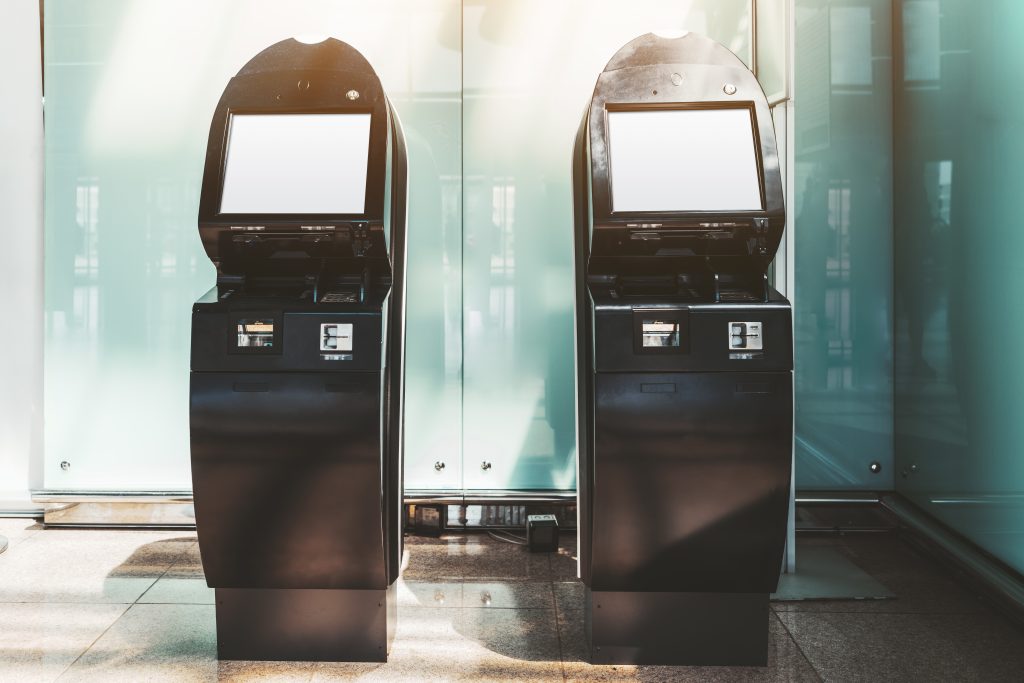
In order to save time, many Taco Bells and Wendy’s now have kiosk-only ordering with no dining room. A consumer finds them on a smart phone map, and then shows up finding, there is no dining room. In its place, is a small window, two ordering kiosks, a food pickup window but no dining room and no bathrooms. It takes longer to order food and there is no place to sit.
In order to save 10% labor costs, the companies have eliminated half of the product value (eating the food in a diner). Now someone has to eat outside standing up, in their car, or wait until they get home. This costs them time and effort to locate a suitable eating location for their subpar food.
Another example of time inflation includes customer service hot lines that take three minutes of random phone tree inputs until you get to a live agent, or an AI consumer hot line that doesn’t answer your questions after minutes of struggle. These all add time to what was before simple, streamlined transactions, but the companies do incur labor cost savings.
The best example of time inflation is with banks that no longer use multiple tellers but instead keep only one teller at a time. Banking transactions now take twenty-five minutes instead of five minutes, with a net loss of twenty minutes.
All these time losses add up over the course of a year, resulting in far fewer hours available for individuals to work or have recreation, family life, community involvement, or faith involvement.
This time loss is real and substantial. The net result is that workers spend less time training and building skills, and there is a real productivity loss to the US GDP caused by this underinvestment in upskilling.